Adobe House Santa Fe: What Every Buyer Should Know Before Falling in Love
Adobe House Santa Fe:
What Every Buyer Should Know
Before Falling in Love
After showing adobe homes in Santa Fe for as many years as I have, I can tell within about ninety seconds of walking a buyer through the front door whether they are going to make an offer or politely ask me where the contemporary listings are.
It comes down to one thing. And it has nothing to do with the price, the neighborhood, the kitchen, or the views.
It is the walls.
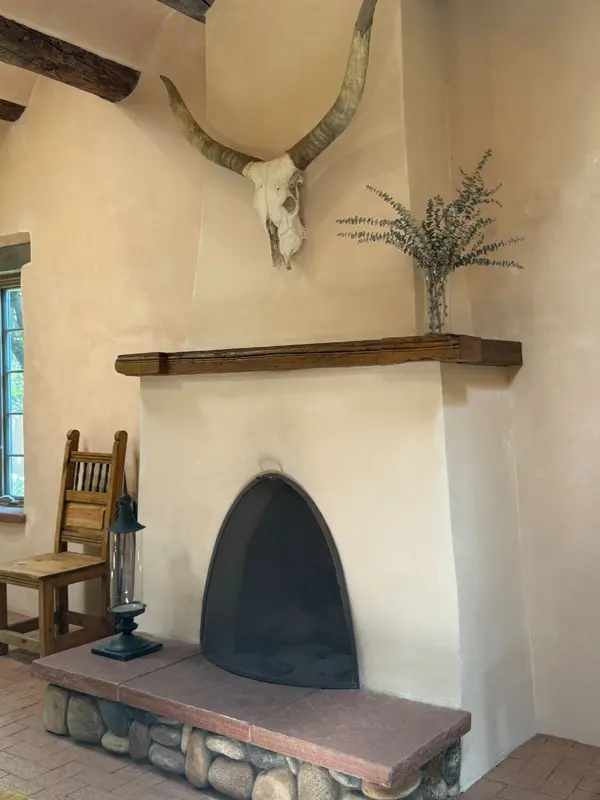
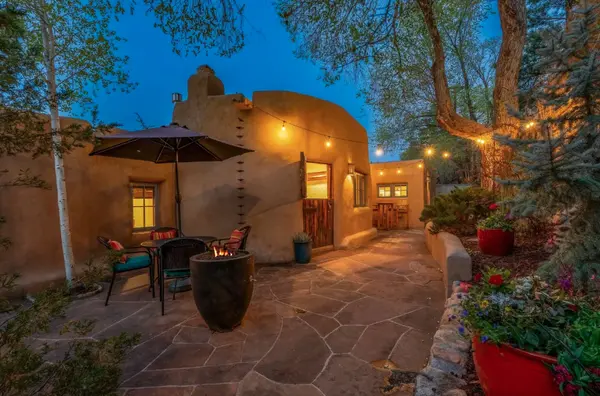
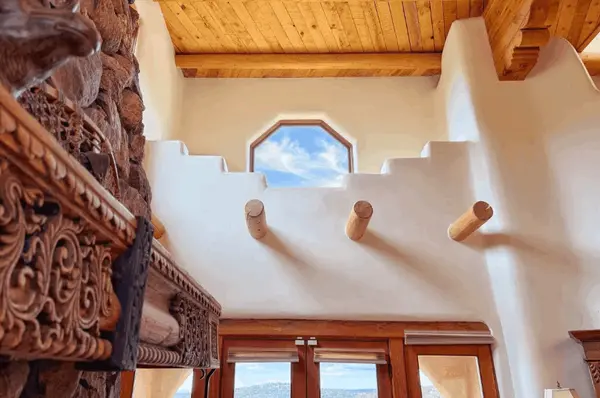
In an adobe home, there are no ninety degree angles. There are no perfectly straight lines. The walls have shoulders and softness. The corners are rounded where the plaster was smoothed by hand. The floors shift a quarter inch over the length of a long hallway because the earth beneath them has been settling since the 1800s. Windows sit a little deeper in one spot than another because the walls are two feet thick and the builder measured with his eye, not a laser.
People either fall in love with that the moment they step inside, or they cannot live with it. There is almost no middle ground. The buyers who love it become adobe buyers for life. The ones who do not will thank me for the showing, get back in the car, and ask what I have in newer construction.
If you are researching adobe homes in Santa Fe right now, this guide is written for you. It covers what an adobe home actually is, the difference between single and double adobe construction, what it is like to live in one, what to look for when you tour, and what the long-term ownership looks like. By the end, you should know which side of that ninety-second test you are on.
What an Adobe Home Actually Is
The word adobe refers to a building material, not a style. True adobe bricks are made from earth, water, sand, and straw, dried in the sun, and stacked into walls that are typically anywhere from twelve to fourteen inches thick for a single course. The walls are then coated inside and out with mud plaster or lime wash, which gives them that soft, hand-finished look that no drywall can imitate.
In Santa Fe, the word adobe gets used a little loosely. Some homes sold as adobe are built from true earthen bricks. Others are built from pumice block or frame construction and then finished in stucco to look adobe. Others are a hybrid, with original adobe sections from the 1800s or early 1900s preserved inside newer additions. If you are serious about buying, the difference matters. It affects everything from insulation to insurance to how the home moves through the seasons.
I walk every buyer through this distinction on their first showing. An experienced Santa Fe agent should be able to tell you, within a few minutes of walking a home, which parts are original adobe, which parts are frame, and what that means for you as an owner.
Single Adobe vs. Double Adobe: The Difference You Can Feel
One of the most important distinctions in the Santa Fe luxury market, and one that almost never comes up in a listing description, is whether a home is single adobe or double adobe.
A single adobe home is built with one course of adobe brick. The walls end up somewhere in the twelve to fourteen inch range after plaster. These are the traditional adobes you find throughout the historic parts of Santa Fe, and they have all the qualities that make adobe special: thermal mass, sound absorption, that unmistakable feel.
A double adobe home takes it a step further. Double adobe means two full courses of adobe brick laid side by side, which creates walls that are roughly twenty-four to thirty inches thick or more once finished. The difference is not subtle. The thermal mass is superior, the interiors are even quieter, the window wells are deeper and more sculptural, and there is a weight to the home when you walk through it that you can feel underfoot. The house feels more substantial, more anchored to the ground.
Double adobe is significantly more expensive to build, so it tends to be associated with higher-end custom homes. Some of the most beautiful double adobe homes in Santa Fe are off Tano Road, many of them built by local builder Buzz Bainbridge, whose work has become a known quantity for buyers who specifically want that construction. When I have a client who tells me they want the most substantial feeling adobe money can buy, Tano Road is usually one of the first places we go.
If you are on the fence about whether adobe is right for you, tour a double adobe. It is the clearest possible expression of what adobe construction can be.
The Feeling of Living in One
This is the part the listing photos cannot capture.
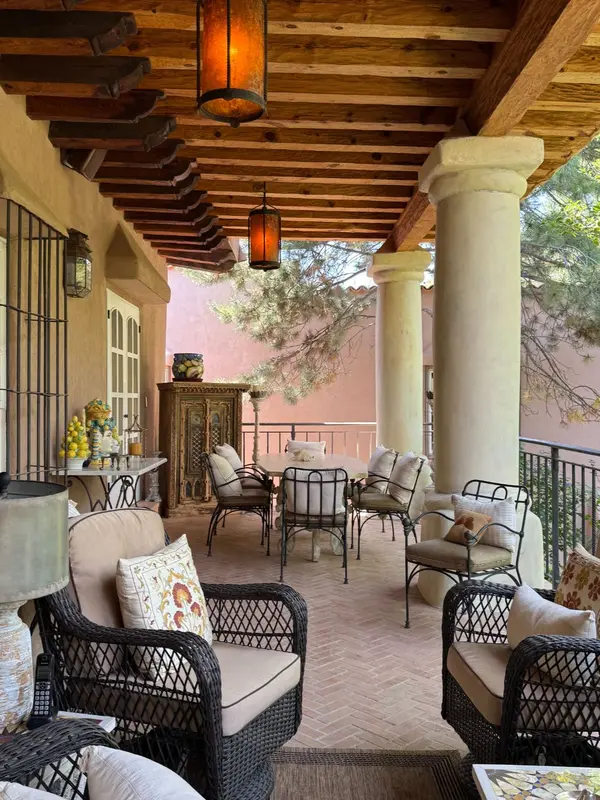
An adobe home has thermal mass. Those thick earthen walls absorb heat during the day and release it slowly at night. In July, when the outdoor temperature hits ninety, the inside of a well-built adobe stays in the low seventies without air conditioning. In January, the same walls hold the warmth from the morning sun and a kiva fireplace well into the evening. It is a kind of passive comfort that a contemporary home, no matter how well insulated, simply cannot replicate. In a double adobe, the effect is even more pronounced. You can go days without touching the thermostat.
Sound behaves differently too. Adobe walls absorb noise. Conversations feel closer, quieter, more intimate. I have had buyers tell me they did not realize how much background hum they were living with in their city apartments until they stood in a Tesuque adobe and heard nothing but the wind in the pinon trees.
And then there is the light. Because the walls are so thick, windows sit deeper and cast longer shadows. Light moves across an adobe room the way light moves across a landscape, slowly and with intention. The same window at the same hour will look completely different in June than it does in December.
For the buyers who love this, nothing else will do. For the buyers who want clean geometry and predictable lines, it will drive them quietly crazy within a year.
A Quick Story About Those Not-Quite-Straight Lines
A few years back I sold a beautiful historic home on the Eastside to clients who had done their homework. They knew what they were getting into. They had read about adobe, toured a dozen homes before making an offer, and fell hard for this particular one.
The living room of their new home sat on the original King's Maps of Santa Fe, meaning that space was likely the entire footprint of the home back when it was first built, probably sometime in the mid-1800s. The walls were the original adobe. The vigas overhead were the originals too. It was extraordinary.
It was also, as it turned out, seventeen feet wide on one side of the room and twenty-three feet wide on the other.
We discovered this when their interior designer tried to place a sofa along the longer wall and realized the sofa would either float awkwardly in the middle of the space or jam into the narrower end. The walls were not parallel. They never had been. No one had ever bothered to square them because squaring them was not the point.
That room took six weeks of furniture experiments to solve. In the end my clients embraced the quirk and built a custom banquette that followed the wall's actual line, which turned out to be the most beautiful corner of the home. They love that room now. They tell the story at every dinner party.
But that is the deal with historic adobe. You are not buying a product. You are buying a three hundred year old conversation between earth, weather, and every hand that has ever plastered a wall in that house. If you need things square, buy contemporary.
What to Look For When You Tour an Adobe
When I walk adobe homes with serious buyers, here is what I look at first.
The roof. Flat or pitched, the roof is the number one determinant of long-term adobe health. Adobe hates water. A roof with proper drainage, canales that direct water away from the walls, and no signs of past leaks is worth its weight in gold. A roof with deferred maintenance is a warning.
The base of the walls. Look for signs of moisture damage at the bottom two feet of any exterior wall. Adobe can wick water from the ground, and once it starts to fail at the base, it can compromise the structural integrity above. A good inspector who knows adobe will check this carefully.
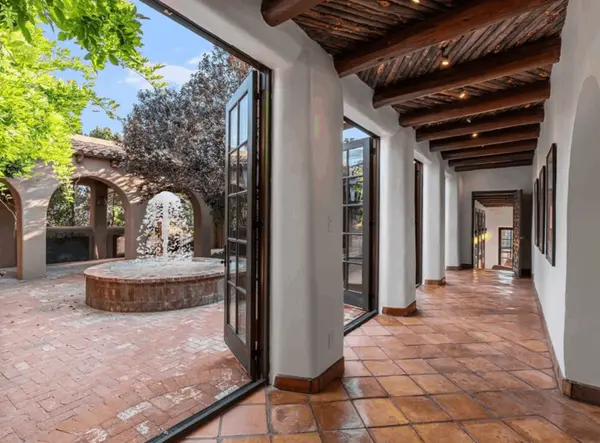
The vigas and latillas. These are the exposed wooden beams and smaller poles that form traditional Santa Fe ceilings. On historic homes, they are often the originals, which is wonderful. But they need to be checked for rot, insect damage, and signs of past water intrusion.
The cracks. Every adobe home has hairline cracks. They are a feature, not a flaw. Adobe expands and contracts with the seasons, and the cracks are the material breathing. What you do not want to see is large diagonal cracks at the corners of windows and doors, which can indicate foundation movement that is beyond normal.
The plaster. Is it true mud plaster, lime plaster, or modern stucco? Each ages differently and requires different maintenance. Mud plaster is the most authentic and the highest maintenance. Modern stucco is the most durable and the least true to tradition. Most Santa Fe buyers want something in between.
Wall thickness. Ask specifically whether the home is single adobe, double adobe, or frame with stucco finish. The answer should not be vague. A seller or listing agent who does not know, or who hedges, is a signal to dig deeper.
You do not have to become an expert in any of this. You just need an agent and an inspector who are.
What Ownership Actually Looks Like
An adobe home is not a set-it-and-forget-it property. It is more like a garden than a house. It needs tending.
Every few years, exterior plaster will need touch-ups. Every five to ten years, depending on the plaster type, a more substantial re-coating may be needed. Canales need to be cleared. Cracks need to be monitored. If you love the home, this kind of maintenance feels like caretaking. If you resent it, you will be miserable.
I tell my out-of-state buyers this very directly. If you are buying a second home in Santa Fe and planning to be here only a few months a year, you need a trusted property manager who understands adobe. The home needs eyes on it, especially after the summer monsoon season and the winter freeze-thaw cycle. This is not the kind of home you can ignore for six months and expect to find in the same condition.
For buyers who are ready to commit to that kind of stewardship, owning an adobe is one of the most rewarding experiences in American real estate. You become part of the history of the home. You are not just an owner. You are the next chapter.
Where to Find Adobe Homes in Santa Fe
Adobe homes are not evenly distributed across Santa Fe. A few specific areas dominate.
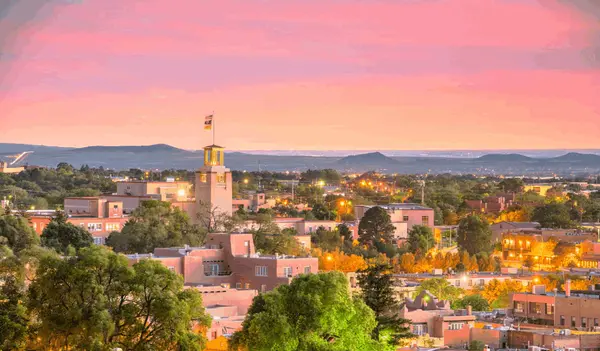
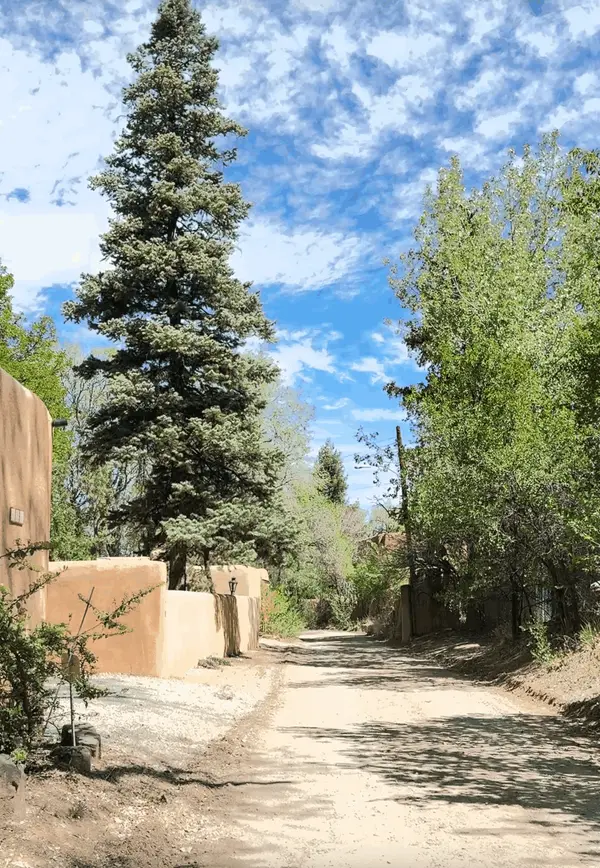
The Historic Eastside has the densest concentration of original historic adobes, many dating back to the 1800s, and Canyon Road runs right through it. The homes there are small, intimate, and prized for their authenticity and walkability to the Plaza. If your priority is historic character, this is where I would start.
Tano Road, in the hills north of town, is where you go for double adobe on acreage. Many of the homes there are custom builds on generous lots, with the kind of construction quality and privacy that second home buyers gravitate toward. This is the area I mentioned earlier, where some of the most substantial double adobes in Santa Fe were built.
Tesuque, just north of town, is known for secluded adobe estates tucked into pinon groves. Properties there tend to be larger, more private, and more rural in feel.
A note on Las Campanas, because buyers often ask: Las Campanas is a beautiful community, but it is primarily newer Pueblo Revival style construction rather than true adobe. There are some adobe homes in the older sections, but if adobe is the specific thing you are looking for, Las Campanas is not where I would focus your search first. Choosing the right neighborhood for what you actually want is half the work of buying here.
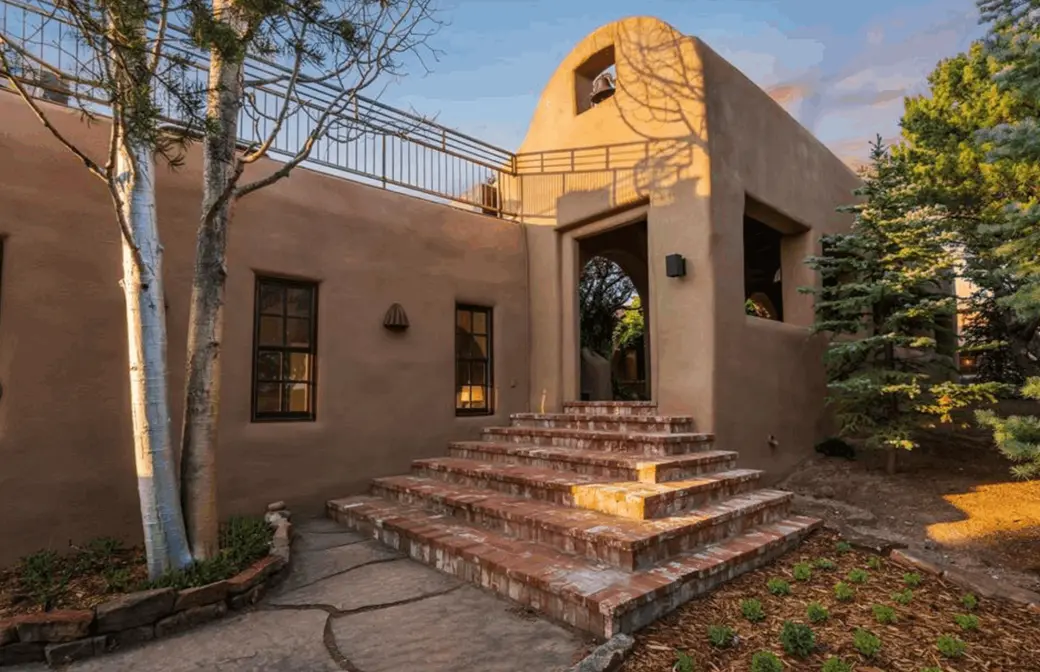
Architectural style matters too. Most Santa Fe adobes are built in either Pueblo Revival or Territorial style, and the difference affects everything from window shape to roofline to what the interior feels like.
Is an Adobe Home Right for You?
Here is the honest test I give to buyers who are on the fence.
Walk into a real adobe. Not a stucco-over-frame. An actual adobe with thick walls and imperfect lines. Stand in the middle of a room for one full minute. Do not look at your phone. Do not talk. Just stand there.
If you feel something settle in your chest, if you feel the room hold you, if you notice the quiet, you are an adobe buyer. If you feel slightly off-balance, if the walls feel wrong to your eye, if you start mentally squaring the corners, you are not. There is no right answer. There is only the one that is true for you.
For the buyers who belong in adobe, there is no substitute. It is why so many of the people I work with tell me they looked at Aspen, Jackson Hole, and Napa first, and none of them felt like this. It is also why Santa Fe's quiet luxury market continues to attract buyers who are looking for something authentic rather than something new.
In the meantime, you might also enjoy reading about Santa Fe's timeless heritage, which gives a fuller picture of the cultural layer that makes these homes what they are.
Categories
Recent Posts