Historic Eastside Santa Fe: A Buyer's Guide to the Heart of Old Santa Fe
Historic Eastside Santa Fe:
A Buyer's Guide to the
Heart of Old Santa Fe
If you have spent any time researching Santa Fe real estate, you have already heard about the Historic Eastside. It is the neighborhood that shows up in every coffee table book, every Architectural Digest spread, every walking tour of the city. What you may not yet know is what it is actually like to own a home there.
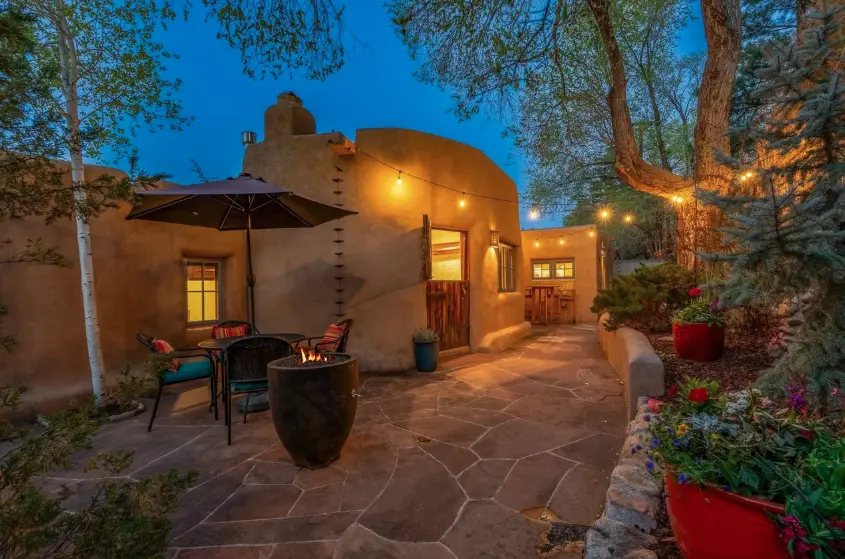
The Historic Eastside is the oldest residential area of Santa Fe, with adobes that predate New Mexico statehood by several decades. Canyon Road runs through the middle of it. The Plaza is roughly a fifteen minute walk away. The homes here sit close to the street behind tall earthen walls, often on small lots, with original vigas overhead and floors that have settled over more than a century into the kind of soft, unsquare geometry no contemporary builder can imitate.
It is the most distinctive neighborhood in Santa Fe. It is also the most demanding. If you are considering buying here, this guide covers what makes the neighborhood different, what homes actually cost right now, what it is like to live inside the Historic Districts Review Board, and the honest test for whether this is your neighborhood or not.
What Makes Historic Eastside Different
Most American neighborhoods are defined by their amenities. Historic Eastside is defined by what was already here before anyone thought to define it.
The streets follow paths that have been walked since before the United States existed. The acequias, the irrigation channels that still water gardens up and down the neighborhood, were dug by Spanish settlers four hundred years ago and remain in active use. The homes you might tour were lived in by a dozen families before you, some of whom were here when New Mexico was still a Mexican territory. Everything you see has a layer beneath it.
This is not historic character as decoration. It is historic character as the actual material of the neighborhood. You feel it the moment you turn off Paseo de Peralta onto Canyon Road, or wander up Acequia Madre and realize the sound has dropped. The high adobe walls that line the streets give every block a sense of containment, of privacy, of being inside something rather than driving past it.
Worth a note: the boundaries of Historic Eastside are not formally posted the way a master-planned community's boundaries are. Locals roughly draw it as the area east of the Plaza, south of Marcy, north of Garcia Street, and west of Camino Cabra, with Canyon Road as the spine. But really, you know it when you are in it.
The Architecture: Where Santa Fe's Soul Lives
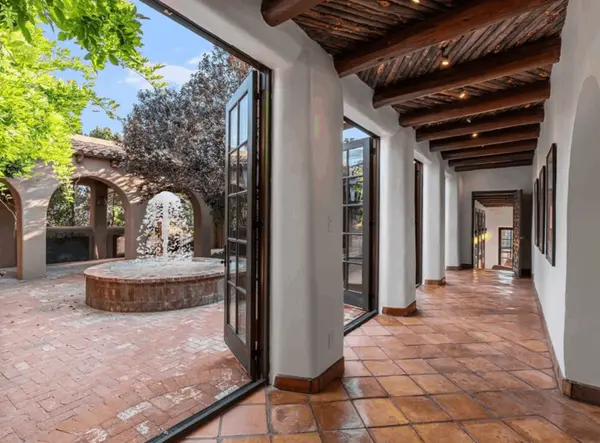
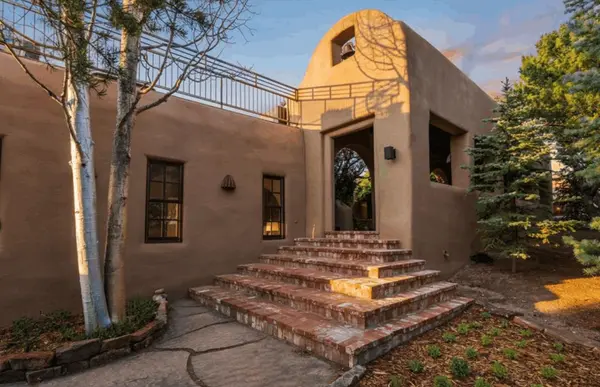
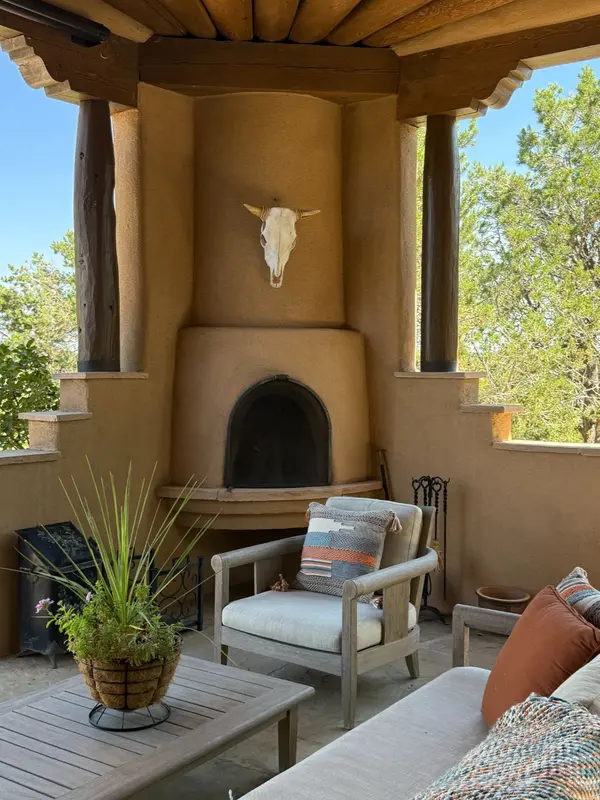
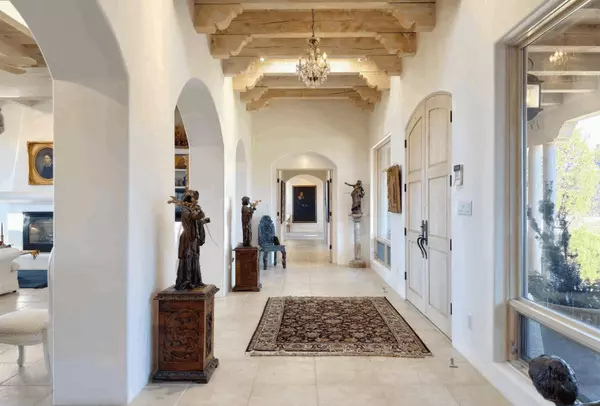
The Historic Eastside has the densest concentration of true adobe construction in Santa Fe. Many of these homes were built in the 1800s, with original earthen walls, original vigas overhead, kiva fireplaces in the corners, and zaguan entryways that open into private courtyards. Some have been carefully expanded over the centuries with sympathetic additions. Others have barely changed since they were first built.
What you do not find here, generally, is contemporary architecture. The Historic Districts Review Board sees to that, and we will get to that in a moment. What it means for you as a buyer is that almost every home you tour will share the same architectural vocabulary: thick adobe walls, hand-finished mud or lime plaster, viga and latilla ceilings, brick or saltillo tile floors, deep window wells, and a relationship with light that does not happen anywhere else in the American Southwest.
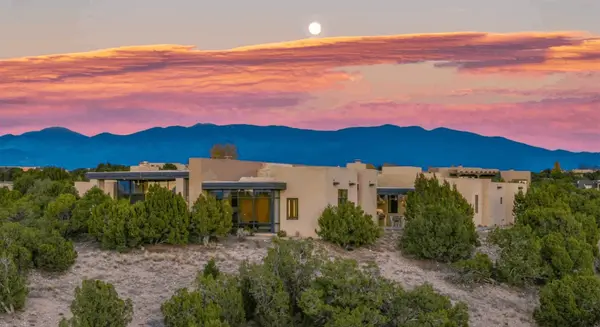
Pueblo Revival and Territorial are the two dominant styles. Pueblo Revival is what most people picture when they think Santa Fe: rounded earthen walls, flat roofs with canales, vigas exposed at the corners, low and horizontal massing. Territorial is its more formal cousin, with brick coping along the rooflines, painted wood window trim, and a slightly more upright feel. Most blocks here have both, sometimes next door to each other.
If you are drawn to the homes that were built in the 1800s and have been continuously lived in since, the Historic Eastside is where I would start. If you want a turnkey contemporary build with smart home wiring and clean white walls, this is probably not the right neighborhood for you, and that is a useful thing to know early.
The HDRB Is Real, and It Is Why the Neighborhood Stays the Way It Is
Every buyer who falls in love with a home here needs to understand the Historic Districts Review Board before they make an offer. The HDRB has authority over what you can and cannot change about the exterior of any home in Santa Fe's historic districts, and Historic Eastside is the heart of that jurisdiction.
Want to add a window? You may need approval. Change the roofline? Definitely. Replace the wood vigas with steel? Not happening. Paint your stucco a color other than an approved earth tone? Probably not. Build an addition? Expect a process that involves architectural review, public notice, and patience.
This sounds restrictive because it is. It is also the precise reason the Historic Eastside still looks the way it does, why your home will hold its value over time, and why your neighbor cannot tear down their adobe and put up a glass box. The HDRB is the reason the neighborhood remains intact, and the reason the homes here are worth what they are worth.
I walk every buyer through what the HDRB allows for a specific property before we write an offer. It is one of the most important conversations in buying a historic Santa Fe home, and one of the most commonly skipped. If you are buying with renovation plans, knowing the rules in advance saves you from falling in love with a vision that cannot legally happen.
Walkability and the Plaza
One quality that sets Historic Eastside apart from every other Santa Fe neighborhood is that you do not actually have to drive anywhere. The Plaza is roughly a fifteen minute walk from most homes in the neighborhood. Canyon Road's galleries are inside the neighborhood. The Saturday Farmers Market, the major restaurants, the Lensic Theater, the New Mexico History Museum, and the Loretto Chapel are all walkable for most homes east of Old Santa Fe Trail.
For buyers relocating from cities where walkability is the baseline expectation, this matters more than they expected when they first started looking. Most of Santa Fe is car dependent. Historic Eastside is the rare exception. Several of my clients have told me, months after closing, that what surprised them most was how rarely they ended up using their cars.
Worth a note: walkability is not the same as urban density. The streets are quiet, residential, and at night many of them are very dark. The neighborhood feels safe in the way old neighborhoods feel safe, which is to say residents know each other and there is a steady human presence. But this is not Manhattan-style street life. If you want streets full of people at ten p.m., this is not your neighborhood. If you want to walk to dinner and back through quiet streets and meet your dog walking neighbors on the way home, this is exactly your neighborhood.
The Community Character
The people who live in Historic Eastside tend to share a particular set of values. They are typically not chasing newness. They appreciate craftsmanship, age, and the kind of quality that announces itself quietly. Many are artists or writers or retired professionals who have been here for decades. Some are second home owners who came for years before they finally bought. Others are full-time residents who left major cities to slow down without losing access to culture.
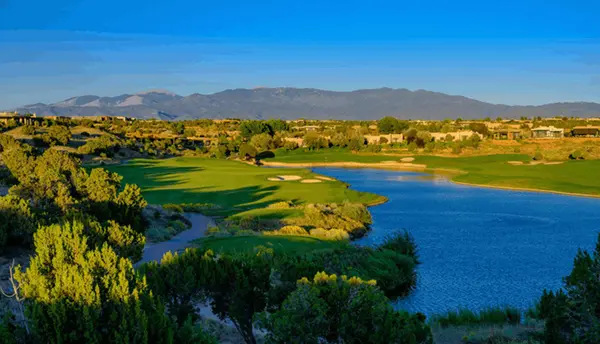
What you will not find as much of here, compared to Las Campanas or Monte Sereno, is a social-amenities-driven community. There is no club, no golf course, no shared spa. Connection happens organically: at the Saturday Farmers Market, at gallery openings on Canyon Road, at neighbor dinners, at the small coffee shops that locals fold into their daily routine. It is a more old-fashioned kind of community than what most newer developments engineer.
For buyers who appreciate the quiet luxury of authentic living, this is precisely the texture they have been looking for. For buyers who want amenities and concierge services and a clubhouse calendar, this is not the neighborhood.
What It Costs to Own Here: The Real Numbers
I pulled the closed sales data from SFAR MLS for Historic Eastside as of May 2, 2026, covering the last ninety days. Here is what the market actually looks like right now.
Twelve single-family detached homes closed in the last ninety days. Sale prices ranged from $975,000 (a small two bedroom on Camino Don Miguel) to $4,725,000 (a compound on Arroyo Tenorio). The median sale price was approximately $1.92M. Median price per square foot was around $790. Median days on market was nine days for properties that priced realistically, though two outliers sat for over four months before adjusting and closing. A third of the homes that sold included a guest house or casita, which is a notable feature of Historic Eastside compounds.
Worth comparing to other Santa Fe neighborhoods. Las Campanas, the city's master-planned gated community, is currently closing at a median around $1.69M and approximately $430 per square foot. Historic Eastside is roughly 1.8 times the price per square foot of Las Campanas. You are paying for smaller homes, more historic character, walkability, and the inherent rarity of inventory in a neighborhood whose footprint cannot expand.
Worth a note on condos. There is a small slice of Historic Eastside inventory that comes in below the single-family detached entry point, and it is worth knowing about even if it is not what most buyers end up with. In the same ninety day window, only two condominiums closed in the neighborhood. Prices were $868,000 and $1,175,000. HOA fees were $93 and $150 monthly, respectively. The HOAs are modest because most of these are small historic compound conversions, not amenity-loaded developments. They are also rare. Which brings me to a point that matters for anyone considering this neighborhood.
The second of those two condos sold in zero days on market. That means it had a buyer lined up before the listing went public. In Historic Eastside, where inventory is genuinely scarce and pricing is genuinely competitive, your agent network matters more than your Zillow alerts. Properties that are well-priced in this neighborhood are often gone before they ever hit the major search portals. If you are looking here seriously, you want an agent who knows the listing pipeline before it goes live.
Carrying costs for single-family detached homes in Historic Eastside do not include HOA fees, which is a meaningful cost difference compared to gated communities. What you do pay is property tax, insurance (sometimes higher than newer construction because of the historic-home risk profile), and the actual maintenance reality of owning a hundred-fifty-year-old adobe. Plaster needs touch-ups every few years. Canales need clearing. Roofs need attention. If you are buying a second home and not living here full time, you will want a property manager who specifically knows adobes.
A Story About Layered History
A few years back I sold a historic home on the Eastside to clients who had spent eighteen months researching Santa Fe before they ever picked up the phone. They knew exactly what they were getting into. They had read about adobe, toured a dozen homes before making an offer, and fell hard for one particular property.
The living room of their new home sat on the original King's Maps of Santa Fe. That meant the space was likely the entire footprint of the home back when it was first built, sometime in the mid-1800s. The walls were the original adobe. The vigas overhead were the originals too. We knew of at least eight families who had owned the home before them. It was extraordinary.
It was also seventeen feet wide on one side of the room and twenty-three feet wide on the other.
We discovered this when their interior designer tried to place a sofa along the longer wall and realized the sofa would either float awkwardly in the middle of the space or jam into the narrower end. The walls were not parallel. They never had been. No one had ever bothered to square them, because squaring them was not the point.
That room took six weeks of furniture experiments to solve. In the end the clients embraced the quirk and built a custom banquette that followed the wall's actual line. It became the most beautiful corner of the home. They tell the story at every dinner party.
That is what owning a home in the Historic Eastside actually is. You do not buy a product. You buy a layered conversation between earth, weather, generations of plaster trowels, and every owner who ever lived inside those walls. You become the next chapter. The home does not adjust to you. You adjust to it. For the right buyer, that is precisely the appeal.
Who Historic Eastside Is Right For
Historic Eastside attracts a particular kind of buyer. They are typically past a certain age and a certain income bracket. They have already owned the contemporary home, the new construction, the trophy property. What they want now is something with depth.
They are not afraid of maintenance. They are not afraid of imperfection. They are not afraid of the HDRB. They want walls that have weight. They want streets where they recognize their neighbors. They want to walk to dinner. They want to live inside the most distinctive piece of Santa Fe instead of driving past it on weekends.
If that sounds right, this is your neighborhood. If you want everything new, everything matched, everything finished by the developer, please look at one of the other Santa Fe neighborhoods instead. There is no wrong answer. There is only the right answer for you.
Here is the honest test. Walk down Acequia Madre on a Sunday morning. Notice how the light falls on the adobe walls. Notice how the sound has dropped. Stand in front of any two-hundred-year-old home and ask yourself whether you feel pulled toward it or whether you feel a vague unease. Your body will tell you the truth. The people who belong in this neighborhood feel it the first time they walk through it. The people who do not, also know within a few minutes.
Categories
Recent Posts